
New Puppy Checklist 2026: Everything You Need for Your Dog's First Week Home
Bringing a puppy home is one of life's most joyful milestones — and also one of the most disorienting. Between the excitement of a new furry family member and the sudden realization that you're now responsible for a living creature who can't yet tell you what it needs, first-time puppy owners often find themselves scrambling to figure out what actually matters in those crucial early days.
This guide walks through everything you need before your puppy arrives, what to expect during the first week, and how to lay the groundwork for good habits that will last a lifetime.
Before You Bring Your Puppy Home
Preparation makes an enormous difference in how smoothly the transition goes, both for your puppy and for your own sanity. Ideally, gather your supplies and puppy-proof your home a few days before your new dog actually arrives.
Puppy-Proofing Your Space
Puppies explore the world with their mouths, which means anything within reach is a potential chew toy or safety hazard. Before your puppy comes home, walk through each room and address the following:
- Electrical cords: Tuck away or cover cords that dangle within reach, since chewed cords pose both a choking and electrocution risk.
- Toxic plants: Many common houseplants, including lilies, aloe vera, and pothos, are toxic to dogs if ingested. Research your specific plants or temporarily relocate them.
- Household chemicals: Store cleaning supplies, medications, and anything toxic in cabinets with childproof latches.
- Small objects: Remove anything small enough to be a choking hazard, including coins, buttons, and children's toys.
- Trash cans: Use lidded bins or store trash behind a closed cabinet door, since puppies are notoriously drawn to food scraps.
- Baby gates: Consider gating off rooms with particularly high risk, such as a garage with tools or a kitchen with a trash bin.
Essential Puppy Supplies Checklist
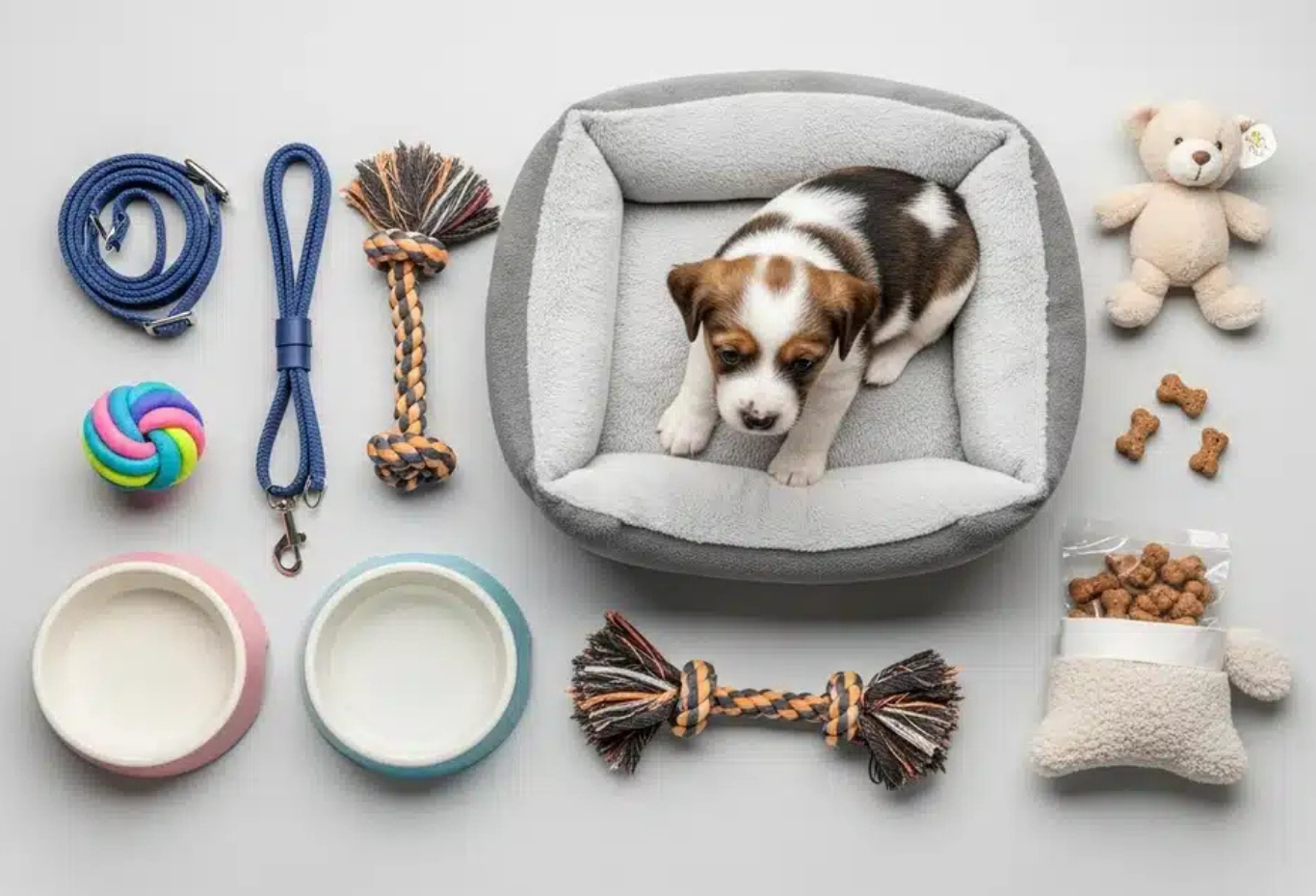
Here's a breakdown of what most puppies need during their first weeks at home, organized by category.
Feeding Supplies
- Food and water bowls (stainless steel or ceramic tend to be more durable and hygienic than plastic)
- Age-appropriate puppy food, ideally the same brand your puppy was already eating to avoid digestive upset
- A slow-feeder bowl if your puppy tends to eat too quickly
- Treats for training, cut small enough to avoid overfeeding
Sleeping and Crate Essentials
- A properly sized crate, large enough for your puppy to stand, turn around, and lie down comfortably, but not so large that they can eliminate in one corner and sleep in another
- A comfortable crate mat or bed
- A soft blanket, ideally one that smells like their littermates if you were given one at pickup
Collar, Leash, and ID
- A lightweight, adjustable collar sized for a growing puppy
- A standard leash (avoid retractable leashes for early training stages, since they don't teach loose-leash walking well)
- An ID tag with your contact information, along with microchipping, which many vets recommend during the first vet visit
Grooming Supplies
- A soft-bristle brush suited to your puppy's coat type
- Puppy-safe shampoo
- Nail clippers or a grinder, along with styptic powder in case of accidental cuts
- A toothbrush and dog-safe toothpaste to begin dental care habits early
Toys and Enrichment
- A variety of chew toys with different textures, since teething puppies often prefer specific materials
- Puzzle toys or treat-dispensing toys for mental stimulation
- A soft plush toy for comfort, particularly helpful during the first nights away from littermates
Cleanup Supplies
- Enzymatic cleaner specifically designed to break down pet urine and eliminate odor, which reduces the likelihood of repeat accidents in the same spot
- Puppy training pads, if you plan to use them as part of your house-training approach
- Poop bags for walks
Choosing the Right Veterinarian
Schedule a first veterinary visit within the first few days of bringing your puppy home, even if they seem perfectly healthy. This visit typically includes:
- A general health check to identify any immediate concerns
- Discussion of a vaccination schedule based on your puppy's age
- Deworming, since many puppies carry intestinal parasites regardless of how they were raised
- Guidance on spay or neuter timing, if applicable
- Recommendations on flea, tick, and heartworm prevention
Building a relationship with a vet early gives you a trusted resource for questions throughout your puppy's first year, which tends to involve far more medical milestones than adulthood.
Setting Up a Routine
Puppies thrive on consistency, and establishing a predictable routine from day one helps with everything from house-training to reducing anxiety.
Feeding Schedule
Most puppies benefit from three to four small meals a day, gradually reducing to two meals as they approach adulthood. Feeding at consistent times also helps you predict when they'll need to relieve themselves, which is closely tied to digestion.
Potty Training Basics
House-training is often the top concern for new puppy owners, and the good news is that consistency solves most of the challenge.
- Take your puppy outside immediately after waking up, after meals, after playtime, and every one to two hours in between during the earliest weeks.
- Choose a consistent potty spot and bring your puppy there each time, since the scent cues help reinforce the habit.
- Reward successful potty breaks immediately with praise or a small treat.
- Expect accidents, especially in the first few weeks, and clean them thoroughly with enzymatic cleaner to avoid your puppy associating that spot with future bathroom breaks.
Sleep Expectations
Puppies sleep far more than most new owners expect, often 18 to 20 hours a day when you account for naps throughout daytime activity. Don't be alarmed by frequent, sudden naps — this is a normal and important part of healthy development.
The first few nights can be difficult, since puppies are adjusting to sleeping away from their littermates for the first time. Placing the crate near your bed initially, using a warm (not hot) water bottle wrapped in a towel, and a ticking clock to mimic a heartbeat are common techniques to ease this transition.
Early Training and Socialization
The first weeks at home are a critical window for shaping your puppy's long-term behavior and temperament.
Basic Commands to Start With
Short, positive training sessions of five to ten minutes work far better than long sessions, since puppies have limited attention spans. Start with simple, high-value commands:
- Sit: Often the easiest first command, since it can be lured naturally with a treat held above the nose.
- Come: Critical for safety, and best reinforced heavily and positively from the very beginning.
- Name recognition: Simply saying your puppy's name and rewarding them when they look at you builds an important communication foundation.
Socialization
Veterinarians generally recommend a careful balance between socialization and disease prevention, since puppies aren't fully vaccinated until several weeks into their vaccination schedule. Many trainers suggest controlled socialization opportunities, such as:
- Puppy classes specifically designed for partially vaccinated puppies in a controlled environment
- Introducing your puppy to a variety of sounds, surfaces, and gentle handling at home
- Carrying your puppy in public spaces they can observe safely without direct contact with unknown animals, if full vaccination hasn't been completed
The socialization window, generally considered to fall within the first few months of life, has a significant impact on how confident and adaptable your dog becomes as an adult.
Managing the Emotional Adjustment
It's easy to focus entirely on physical supplies and logistics, but the emotional adjustment period matters just as much, both for your puppy and for you.
Expect some whining, especially during the first few nights, as your puppy adjusts to a new environment without their littermates. This is normal and typically improves within a week or two as your puppy builds trust and a sense of security in their new home.
For families with children, establishing clear rules early, such as gentle handling and supervised interactions, helps prevent accidental injury to the puppy and sets a foundation for a positive lifelong relationship between your children and your pet.
If you have other pets at home, introduce them gradually and in neutral spaces rather than forcing immediate interaction, giving both animals time to adjust at their own pace.
Common First-Week Mistakes to Avoid
Overwhelming your puppy with too many visitors right away. While it's tempting to show off your new addition, too much stimulation in the first few days can be stressful. Ease into introductions gradually.
Inconsistent rules among family members. If one person allows the puppy on the couch and another doesn't, puppies become confused. Agree on household rules before your puppy arrives.
Skipping crate training because it feels unkind. When introduced properly and positively, a crate becomes a safe den-like space rather than a punishment, and it plays a major role in both house-training and safety.
Underestimating exercise needs while overestimating leash-walking. Very young puppies shouldn't be over-exercised on hard pavement, since their joints are still developing. Short, gentle play sessions are typically more appropriate than long walks at this stage.
Budgeting for Your New Puppy
Beyond the initial supply purchases, it's worth planning for ongoing costs, including food, routine veterinary care, grooming, and potential pet insurance. Many new owners underestimate the first-year cost of dog ownership, which typically includes higher veterinary expenses due to the vaccination series, spay or neuter surgery, and initial training classes.
Setting aside a small monthly budget for unexpected veterinary visits can also help avoid financial stress later, since puppies are naturally curious and occasionally accident-prone.
Final Thoughts
The first week with a new puppy is a whirlwind of excitement, exhaustion, and steep learning curves, but it also lays the foundation for years of companionship ahead. By preparing your home in advance, gathering the right supplies, and committing to consistency in feeding, potty training, and early socialization, you give your puppy the best possible start in their new life with you.
Patience is the most valuable tool in your entire puppy checklist. The chewed shoes and 3 a.m. whimpers are temporary; the bond you're building is not.