How to Stock Your First Kitchen Without Overbuying
Moving into a new home or apartment often means facing an empty kitchen and an overwhelming number of opinions about what you supposedly need to fill it. Cooking blogs, gadget retailers, and well-meaning relatives all have different ideas about must-have kitchen items, and the result is often a cluttered kitchen full of single-purpose gadgets that get used once and then forgotten in the back of a drawer.
This guide takes a more practical approach: what you genuinely need to cook the vast majority of everyday meals, organized by priority, so you can build a functional kitchen gradually without wasting money on items that sound useful but rarely earn their keep.
Start With Core Cooking Vessels
Before anything else, prioritize a small set of versatile pots and pans that can handle the bulk of everyday cooking tasks.
- A large skillet or frying pan, ideally around 10 to 12 inches, for sautéing, searing, and general stovetop cooking
- A medium saucepan with a lid, useful for boiling, simmering sauces, and cooking grains
- A large stockpot, essential for pasta, soups, and larger batch cooking
- A baking sheet, which does double duty for roasting vegetables, baking cookies, and reheating leftovers under a broiler
These four pieces alone can realistically handle the overwhelming majority of home-cooked meals, and it's far better to buy one or two quality pieces than an entire matching set filled with sizes you'll rarely use.
Essential Cutting and Prep Tools
- A chef's knife, the single most-used tool in almost any kitchen, worth investing a bit more in for comfort and durability
- A paring knife for smaller, more detailed tasks
- A cutting board, ideally at least one dedicated specifically to raw meat to avoid cross-contamination
- Measuring cups and spoons, particularly important for baking, where precision matters more than in general cooking
- A mixing bowl or two, useful for everything from tossing salads to prepping ingredients
Basic Utensils Worth Having
- A sturdy spatula
- A wooden spoon or two
- Tongs, genuinely one of the most versatile tools for flipping, serving, and tossing
- A can opener
- A vegetable peeler
- A colander for draining pasta and rinsing produce
- A whisk, useful for everything from scrambled eggs to salad dressings
- A grater, for cheese, citrus zest, and vegetables alike
Small Appliances: What's Actually Worth the Counter Space
Small appliances take up valuable counter and storage space, so it's worth being selective rather than accumulating every gadget you see recommended.
Genuinely High-Value Appliances
- A microwave, useful for reheating and quick cooking tasks that would otherwise require pulling out a full pot or pan
- A kettle, whether electric or stovetop, for hot water needs beyond just tea or coffee
- A toaster or toaster oven, with toaster ovens offering added versatility for small baking and reheating tasks
- A coffee maker or French press, depending on your personal coffee habits and how much counter space you're willing to dedicate
Worth Considering Based on Your Cooking Style
- A blender, valuable for smoothies, soups, and sauces, though the right size and power level depends heavily on how often you'll realistically use it
- A slow cooker or multi-cooker, particularly useful for anyone with a busy schedule who benefits from hands-off, low-maintenance cooking
- A food processor, genuinely useful for anyone who cooks frequently and finds themselves chopping, shredding, or blending ingredients regularly
Consider Waiting On
Specialty appliances designed around a single food category, such as dedicated waffle makers, ice cream machines, or bread makers, are worth waiting to purchase until you're confident you'll use them regularly, rather than buying based on enthusiasm during the initial kitchen setup phase.
Building the Dining Side of Your Kitchen
Cooking is only half of the kitchen and dining equation. A functional dining setup requires its own set of essentials, separate from cookware and prep tools.
Dinnerware Basics
- Plates, ideally enough for your household plus a few extra for guests, in a simple, versatile style that works for both everyday meals and slightly more special occasions
- Bowls, useful for cereal, soup, pasta, and general everyday use
- Glasses, including both everyday drinking glasses and, if you enjoy them, a few glasses suited to specific beverages like wine
Flatware and Serving Basics
- A basic flatware set including forks, knives, and spoons, sized appropriately for your household
- A few serving utensils, such as a large spoon and serving fork, for family-style meals or entertaining
- Cloth or paper napkins, along with placemats or a simple tablecloth if you want a slightly more put-together dining setup
Storage for Leftovers
- A set of stackable, reusable food storage containers, ideally with a mix of sizes to accommodate everything from small amounts of sauce to larger meal portions
- Reusable or disposable wrap options for covering dishes or wrapping smaller food items
What You Can Reasonably Skip at First
Many kitchen gadgets marketed as essential serve a narrow, single purpose that doesn't justify the drawer space for most beginner cooks. Items like dedicated avocado slicers, garlic presses, egg separators, or specialty appliances built around a single dish are worth waiting on until you know you'll genuinely use them regularly, rather than buying them upfront based on marketing or a single recipe video. In most cases, a good knife and a bit of practiced technique can accomplish the same task as a narrow single-purpose gadget, without the added clutter.
Organizing Your Kitchen for Efficiency
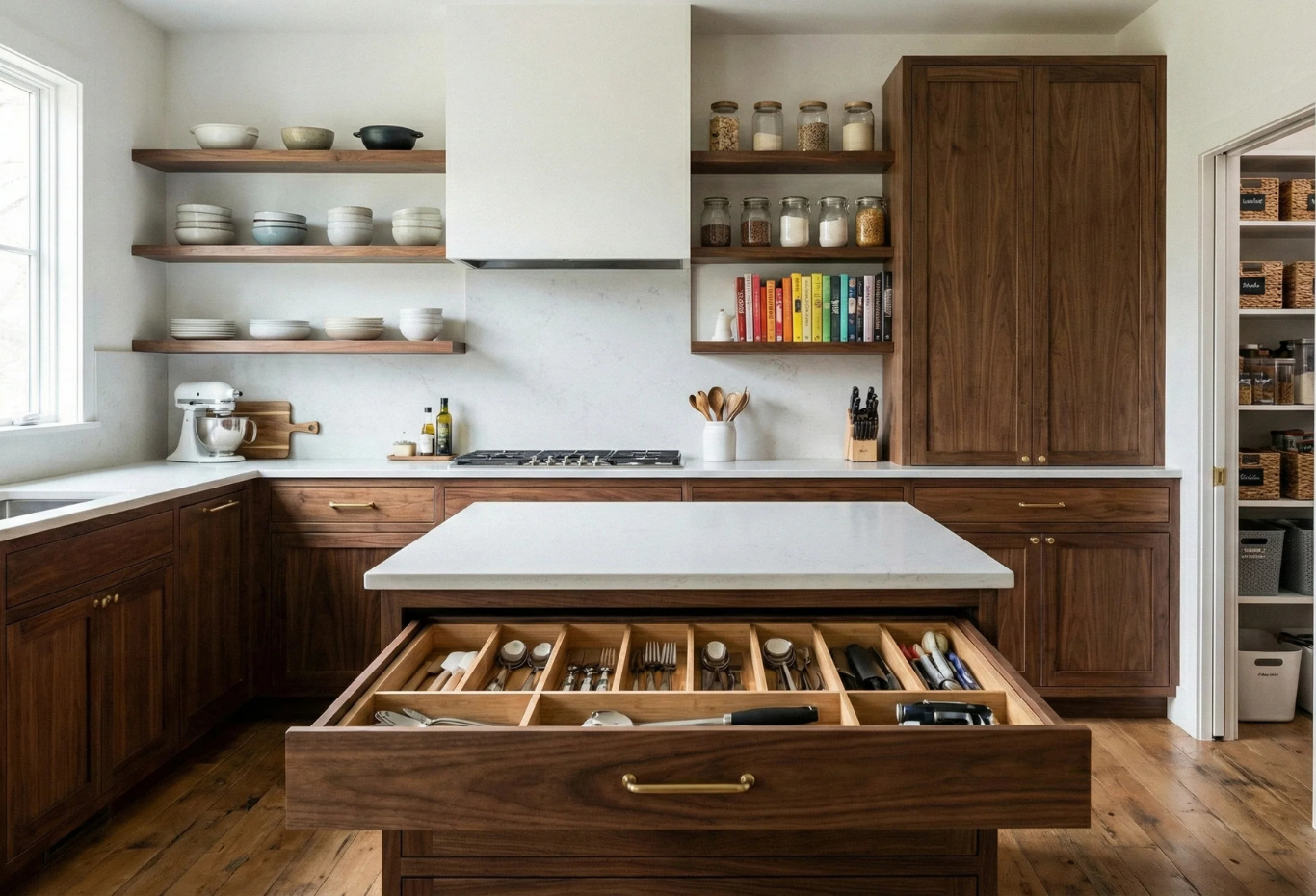
Once you've gathered your core items, how you organize them meaningfully affects how enjoyable and efficient your cooking experience feels day to day.
Keep Frequently Used Items Within Easy Reach
Store the tools and cookware you use most often, such as your primary skillet or everyday utensils, in the most accessible cabinets and drawers, reserving higher or harder-to-reach storage for items used less frequently, like specialty bakeware or seasonal serving pieces.
Group Items by Function
Organizing your kitchen by function, keeping baking tools together, cooking utensils together, and food storage containers together, rather than scattering related items across multiple cabinets, makes it considerably easier to find what you need without unnecessary searching mid-recipe.
Avoid Overcrowding Counters
Keeping counters relatively clear, with only your most frequently used appliances left out, creates more usable workspace for actual food preparation, which matters more than it might seem when you're in the middle of cooking a meal that requires multiple cutting boards or mixing bowls at once.
A Practical Buying Order for Tight Budgets
If you're setting up a kitchen gradually due to budget constraints, prioritizing purchases in a sensible order helps ensure you can cook real meals early on rather than waiting until you've acquired everything at once.
- A knife, cutting board, and one versatile pan — enough to prepare simple meals immediately
- A pot for boiling and a baking sheet — expanding your cooking methods to include pasta, soups, and roasted or baked dishes
- Basic dinnerware and flatware for your household size — enough to actually eat the meals you're now able to cook
- Measuring tools and mixing bowls — opening up baking and more precise recipes
- Small appliances based on your specific habits — added only once you have a clear sense of which ones you'll genuinely use regularly
This staged approach avoids the common mistake of spending a large amount upfront on a complete matching set, much of which may go unused, while leaving out items you'll actually reach for daily.
Quality vs. Budget: Where to Splurge and Where to Save
Not every kitchen item benefits equally from spending more money, and knowing where quality genuinely matters helps allocate a limited budget more effectively.
Worth investing in: a good chef's knife, since a quality blade meaningfully improves both the ease and safety of food prep, and a solid, heavy-bottomed skillet, since cheap, thin pans tend to heat unevenly and warp more easily over time.
Reasonable to buy budget versions: basic dinnerware, everyday glasses, and simple utensils like spatulas and spoons, where functional performance differs relatively little between budget and premium versions for most everyday use.
Stocking a Basic Pantry Alongside Your Tools
A kitchen full of great tools still needs ingredients on hand to be genuinely useful day to day. Building a small pantry of shelf-stable basics means you can put together a real meal even on days when a full grocery trip isn't practical.
Pantry Staples Worth Keeping on Hand
- Cooking oil, along with salt and a small selection of commonly used spices
- Rice, pasta, or another shelf-stable starch as a meal base
- Canned goods such as beans, tomatoes, and broth, all of which form the backbone of countless simple meals
- Flour and sugar, useful even for those who don't consider themselves regular bakers, since they show up in a surprising number of savory recipes as well
- A few condiments that match your typical cooking style, whether that's soy sauce, hot sauce, or a favorite vinegar
Refrigerator and Freezer Basics
Beyond shelf-stable pantry items, keeping a small rotation of eggs, milk or a preferred alternative, and a few frozen vegetables or proteins on hand ensures you always have the foundation for a quick meal, even when your fresh produce supply has run low between grocery trips.
Adjusting the List for Your Actual Cooking Habits
Every household cooks differently, and the exact list of essentials should flex somewhat based on your specific habits rather than being treated as a rigid, universal checklist. A household that bakes frequently will benefit from investing earlier in quality mixing bowls and measuring tools, while a household that cooks primarily on the stovetop might prioritize a second skillet over specialty bakeware.
The goal of any starter kitchen list is to give you a strong, flexible foundation, not to dictate exactly how you should cook. Pay attention to which tools you reach for repeatedly during your first few months of cooking, and let that real usage pattern guide what you add to your kitchen next, rather than following a generic list indefinitely.
Common Mistakes When Setting Up a New Kitchen
Buying a large boxed cookware or knife set instead of individual pieces. These sets often bundle several rarely-used sizes alongside the few pieces you'll actually reach for regularly, and buying a handful of well-chosen individual items typically serves most households better than a full matching set.
Prioritizing appearance over function for everyday items. It's tempting to choose dinnerware or cookware based purely on how it looks in photos, but functional details like how well a pan heats or how comfortably a knife handle fits your grip matter far more for daily use than aesthetics alone.
Assuming you need duplicates of everything right away. Unless you're regularly hosting large groups, one good chef's knife, one primary skillet, and one main cutting board are enough to start. Duplicates and backups can be added later once you have a clear sense of your actual usage patterns.
Final Thoughts
A functional, well-used kitchen doesn't require every gadget on the market or an overflowing cabinet of dinnerware you'll rarely use. It requires a small, thoughtfully chosen collection of genuinely versatile tools, a basic pantry to back them up, and a dining setup sized appropriately for your household. Start with the essentials outlined here, cook with them consistently for a while, and let your own real habits, rather than marketing or a long checklist, guide what you add next.
Building a kitchen this way, gradually and based on genuine need, tends to result in a space that feels efficient and personal rather than cluttered with tools that never quite earned their keep.