Baby Products: A Practical Guide to Choosing the Right Essentials for Your Baby
Baby products can make everyday parenting easier, but choosing what to buy is not always simple. Walk into a baby store or browse an online marketplace and you can quickly find hundreds of products for feeding, sleeping, bathing, clothing, travel, play, and nursery care.
The challenge is not finding baby products. The challenge is knowing which products are genuinely useful, which features matter, what is appropriate for your baby's age, and which purchases can safely be skipped.
A practical approach is to build your baby's products around daily routines rather than buying everything that looks convenient. Start with the essentials, consider your baby's stage of development, check safety information, and then add products that solve a specific problem.
This guide explains the major baby product categories, what to look for when shopping, how to avoid unnecessary purchases, and how to create a more practical baby setup.
What Are Baby Products?
Baby products are items designed to support a baby's everyday needs, including sleeping, feeding, changing, bathing, clothing, transportation, play, and personal care.
The category includes both simple everyday products and larger pieces of equipment.
Common examples include:
-
Diapers and changing supplies
-
Baby wipes
-
Baby clothing
-
Bottles and feeding accessories
-
Breast pumps and nursing accessories
-
Cribs and bassinets
-
Baby monitors
-
Strollers
-
Car seats
-
Baby carriers
-
Bathing products
-
Baby skincare products
-
Toys and developmental products
-
High chairs and feeding seats
-
Nursery furniture
-
Travel accessories
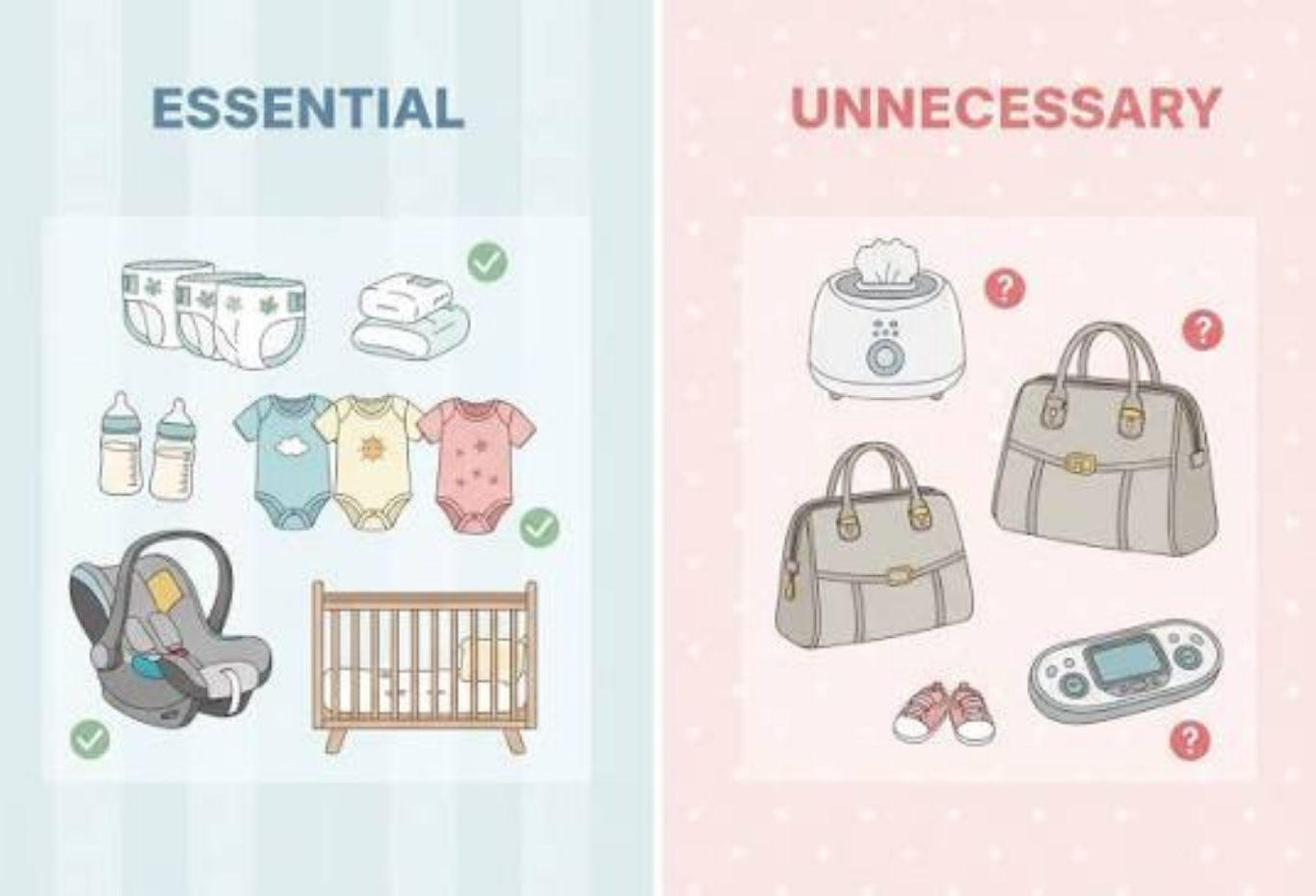
Not every baby needs every product. A better shopping strategy is to separate products into essential, useful, occasional, and optional categories.
How to Build a Baby Product List
Before buying anything, think about what your baby will actually need during a normal day.
A simple starting point is to divide shopping into six areas:
-
Sleep
-
Feeding
-
Diapering
-
Clothing
-
Bath and personal care
-
Travel and transportation
You can then add products for play, nursery organization, and convenience.
This approach prevents a common problem: buying products because they are popular rather than because they are useful.
For example, a newborn may need a safe sleep space immediately, while a high chair becomes more relevant later. Similarly, newborn-sized clothing may have a short useful period, whereas adjustable clothing can remain useful for longer.
Essential Baby Products for Newborns
Newborn shopping should focus on basic daily needs rather than creating a complete nursery filled with equipment.
Some of the most practical categories include:
Diapers and Changing Supplies
Diapers are one of the most frequently used baby products, so comfort, fit, absorbency, and ease of changing matter.
Depending on your preference, you may choose disposable diapers, reusable cloth diapers, or a combination.
Useful changing supplies can include:
-
Diapers
-
Baby wipes
-
Changing mat
-
Diaper cream
-
Disposable or reusable changing bags
-
Diaper storage
-
Clean clothes for unexpected changes
Instead of purchasing large quantities immediately, it can be sensible to test a smaller package first. Babies can grow quickly, and different diaper designs may fit differently.
Baby Clothing
Newborn clothing should be comfortable, easy to put on, and appropriate for the weather.
Useful basics can include:
-
Bodysuits
-
Sleepsuits
-
Socks
-
Hats for appropriate situations
-
Lightweight layers
-
Warm outerwear when needed
Look for practical features such as easy openings, soft materials, and simple fasteners.
Buying too many newborn-size outfits can also lead to waste because babies may move into larger sizes quickly.
Choosing Safe Baby Sleep Products
Sleep products deserve particular attention because safety is more important than decoration or convenience.
The American Academy of Pediatrics recommends placing healthy infants on their backs for sleep and using a firm, flat, non-inclined sleep surface that meets applicable safety standards.
A practical sleep setup may include:
-
A suitable crib, bassinet, portable crib, or play yard
-
A firm mattress designed for that product
-
A properly fitted sheet
-
Appropriate sleep clothing
The AAP recommends keeping loose blankets, pillows, stuffed toys, bumper pads, and other soft objects out of an infant's sleep area.
This is an important example of why parents should not judge baby products only by appearance. A product may look comfortable or luxurious but still be unsuitable for infant sleep.
What About Baby Sleep Gadgets?
Parents can find products marketed with claims about improving sleep, reducing risks, or monitoring babies.
These products should be evaluated carefully.
The AAP specifically advises caution with products that claim to reduce the risk of sleep-related infant deaths and notes that consumer heart-rate or oxygen-monitoring devices should not be treated as a substitute for safe-sleep practices.
The simplest safe-sleep setup is often better than a nursery full of gadgets.
Baby Feeding Products
Feeding needs vary depending on whether a baby is breastfed, formula-fed, combination-fed, or later eating solid foods.
Bottle Feeding Products
Common bottle-feeding products include:
-
Baby bottles
-
Bottle nipples
-
Bottle brushes
-
Bottle drying racks
-
Formula preparation accessories
-
Insulated bottle bags for travel
When choosing bottles, consider how easy they are to clean and assemble.
A complicated bottle with many small parts may offer features that look attractive but create additional cleaning work.
Breastfeeding Products
Parents who breastfeed may consider products such as:
-
Nursing bras
-
Breast pumps
-
Milk storage containers
-
Nursing pads
-
Breastfeeding pillows
-
Bottle-feeding accessories for expressed milk
The best products depend on the parent's routine. Someone feeding mostly at home may have different needs from someone returning to work or regularly traveling.
Starting Solid Foods
As babies progress to solid foods, the product list changes.
Useful items may include:
-
Baby spoons
-
Suction bowls
-
Feeding bibs
-
Cups
-
High chairs
-
Food storage containers
-
Easy-clean mats
Choose products that are easy to clean and appropriate for your baby's developmental stage.
Baby Bath and Personal Care Products
Bath time does not require an enormous collection of products.
Basic items can include:
-
Baby bathtub or suitable bathing setup
-
Soft washcloths
-
Towels
-
Baby shampoo or cleanser
-
Baby nail-care tools
-
Hairbrush
-
Storage for bathing supplies
When buying skincare products, pay attention to the ingredients and your baby's individual needs. If your baby has persistent skin problems or reactions, consult an appropriate healthcare professional rather than relying only on product marketing.
The same principle applies to specialized creams, oils, and other personal-care products: buy for a specific need instead of automatically buying every available product.
Baby Travel Products
Travel changes what parents need from their baby gear.
A product that works perfectly at home may be inconvenient when traveling.
Useful travel categories include:
-
Car seats
-
Strollers
-
Baby carriers
-
Portable changing mats
-
Diaper bags
-
Bottle bags
-
Travel organizers
-
Portable sleep equipment that meets applicable safety requirements
Choosing a Baby Stroller
When comparing strollers, think about your actual lifestyle.
Consider:
-
Weight
-
Folded size
-
Storage space
-
Wheel design
-
Maneuverability
-
Recline options
-
Ease of folding
-
Transport requirements
-
Compatibility with other equipment
A large stroller can be useful for everyday use but difficult for public transport or frequent travel.
A lightweight stroller can be convenient, but parents should still check its age and weight suitability before use.
Baby Car Seats
A car seat is a safety-critical product, so it should not be selected simply because it has attractive colors or additional accessories.
Check:
-
Appropriate age and size requirements
-
Installation method
-
Vehicle compatibility
-
Manufacturer instructions
-
Applicable safety standards
-
Expiration information where relevant
-
Recall information
Always follow the product's instructions and local regulations.
Baby Carriers and Slings
Baby carriers can make everyday activities easier by keeping the baby close while allowing the parent to move around.
Options include:
-
Wrap carriers
-
Soft structured carriers
-
Ring slings
-
Structured carriers
The important factors are fit, support, adjustability, comfort, and age or weight suitability.
Parents should carefully follow the manufacturer's instructions and ensure that the baby's airway remains clear.
Baby Toys and Development Products
Baby toys should not simply be judged by how entertaining they look.
Think about the baby's age and developmental stage.
Useful categories include:
-
Rattles
-
Soft books
-
Activity toys
-
Floor play mats
-
Teething toys
-
Stacking toys
-
Sensory toys
-
Simple musical toys
A good toy can encourage babies to observe, reach, grasp, explore, and interact.
However, more toys do not automatically mean better development. A smaller collection of age-appropriate toys can be easier to manage and may give parents more opportunities to interact with their baby.
Always follow age recommendations and inspect toys regularly for damage or loose parts.
Baby Nursery Products
A nursery can be designed around function rather than decoration.
Useful nursery categories include:
-
Crib or other appropriate sleep space
-
Mattress
-
Fitted sheets
-
Storage
-
Changing area
-
Clothing organizers
-
Lighting
-
Laundry storage
AAP guidance emphasizes that an infant's sleep environment should remain free of loose bedding and soft objects.
This means nursery design should put safe sleep and accessibility ahead of decorative accessories.
How to Choose Baby Products Online
Online shopping gives parents access to thousands of products, but too much choice can make decisions harder.
Use a simple process.
1. Identify the Problem
Do not start with:
"What baby products should I buy?"
Start with:
"What do I need this product to help me do?"
For example:
-
Need easier diaper changes?
-
Need a travel solution?
-
Need a feeding setup?
-
Need more nursery storage?
-
Need a safe sleep space?
This makes product comparisons more useful.
2. Check the Baby's Age and Stage
A product suitable for a newborn may not be appropriate several months later.
Always check:
-
Recommended age
-
Weight limits
-
Height limits
-
Developmental requirements
-
Usage instructions
3. Compare Features That Matter
Do not compare products based only on the number of features.
Instead, compare the features that affect everyday use.
For example, when comparing changing bags, useful factors may include organization, capacity, cleaning, and comfort.
4. Read Reviews Carefully
Reviews can reveal practical problems that product descriptions do not mention.
Look for repeated comments about:
-
Durability
-
Ease of cleaning
-
Comfort
-
Sizing
-
Assembly
-
Real-world usability
One negative review does not necessarily mean a product is bad. Look for patterns across many reviews.
5. Check Returns and Warranty Information
Baby products can involve frequent sizing changes, compatibility questions, or unexpected problems.
Before purchasing, check:
-
Return period
-
Refund conditions
-
Warranty
-
Replacement policy
-
Customer support
This is particularly important for expensive baby equipment.
Baby Products You Should Not Buy Too Much Of
One of the easiest ways to overspend is purchasing too many products before understanding what your baby actually uses.
Be cautious about buying excessive quantities of:
-
Newborn-size clothes
-
Specialized feeding equipment
-
Large toy collections
-
Decorative nursery accessories
-
Gadgets with overlapping functions
-
Products that your baby may outgrow quickly
A useful rule is:
Buy the essential product first, learn your baby's routine, and then add products that solve an actual problem.
This can reduce both spending and clutter.
How to Save Money on Baby Products
Baby products can become expensive because many items are purchased within a short period.
A better strategy is to prioritize.
Spend More on Safety-Critical Products
For products directly connected with transportation or sleep, safety and correct fit should take priority over appearance.
Buy Fewer Multipurpose Products
If one product performs several useful functions without compromising safety or convenience, it may provide better value.
Avoid Buying for an Imaginary Lifestyle
It is easy to buy equipment for activities you think you will do frequently.
Instead, consider your actual routine.
If you rarely travel, you may not need an extensive collection of travel accessories.
If you live in a small home, compact equipment may be more valuable than large nursery furniture.
What to Check Before Buying Any Baby Product
Before clicking the purchase button, run through this checklist:
Age: Is it suitable for your baby's current stage?
Size: Will it fit your baby and your available space?
Safety: Does it meet relevant safety requirements?
Purpose: Does it solve a genuine problem?
Cleaning: Can it be cleaned easily?
Durability: Will it survive regular use?
Compatibility: Will it work with the equipment you already own?
Reviews: Are there repeated complaints from other buyers?
Returns: Can you return it if it does not work for your needs?
Value: Will you use it enough to justify the cost?
This simple checklist can prevent many unnecessary purchases.
Baby Product Categories Worth Exploring
For a comprehensive baby-products website or shopping section, the category can be organized into several useful subcategories:
Diapering
Diapers, wipes, changing mats, diaper creams, diaper bags, and changing accessories.
Feeding
Bottles, breast pumps, nursing accessories, formula-feeding equipment, bibs, high chairs, and solid-feeding products.
Nursery
Cribs, mattresses, fitted sheets, storage, changing stations, lighting, and nursery organization.
Clothing
Bodysuits, sleepsuits, socks, seasonal clothing, outerwear, and accessories.
Bath & Care
Baby baths, towels, washcloths, skincare, nail-care tools, brushes, and grooming accessories.
Travel
Car seats, strollers, carriers, travel bags, changing mats, and portable equipment.
Toys
Rattles, books, sensory toys, teething products, activity toys, and developmental play products.
Safety
Baby gates, cabinet locks, outlet covers, monitors, and other age-appropriate safety equipment.
These subcategories create a useful structure for comparing products without forcing parents to browse one enormous list.
Final Thoughts: Buy for the Baby You Have, Not the Products You See
The baby-products market can make parenting appear to require hundreds of specialized items. In reality, the best shopping strategy is much simpler.
Start with the basic routines: sleep, feeding, diapering, clothing, bathing, and transportation.
Choose products according to your baby's age and development. Give extra attention to safety-critical products. Read instructions and safety information rather than relying solely on advertising claims. Check reviews for real-world problems, and avoid purchasing large quantities before you know what works for your family.
Most importantly, remember that an expensive product is not automatically a better product.
The right baby products are the ones that are safe, suitable, practical, easy to use, and genuinely useful in your everyday routine.
For sleep products in particular, current AAP guidance emphasizes a firm, flat, non-inclined sleep surface, placing babies on their backs, and keeping loose bedding and soft objects out of the sleep area.
A thoughtful baby-product setup does not need to be enormous. It needs to be purposeful.