
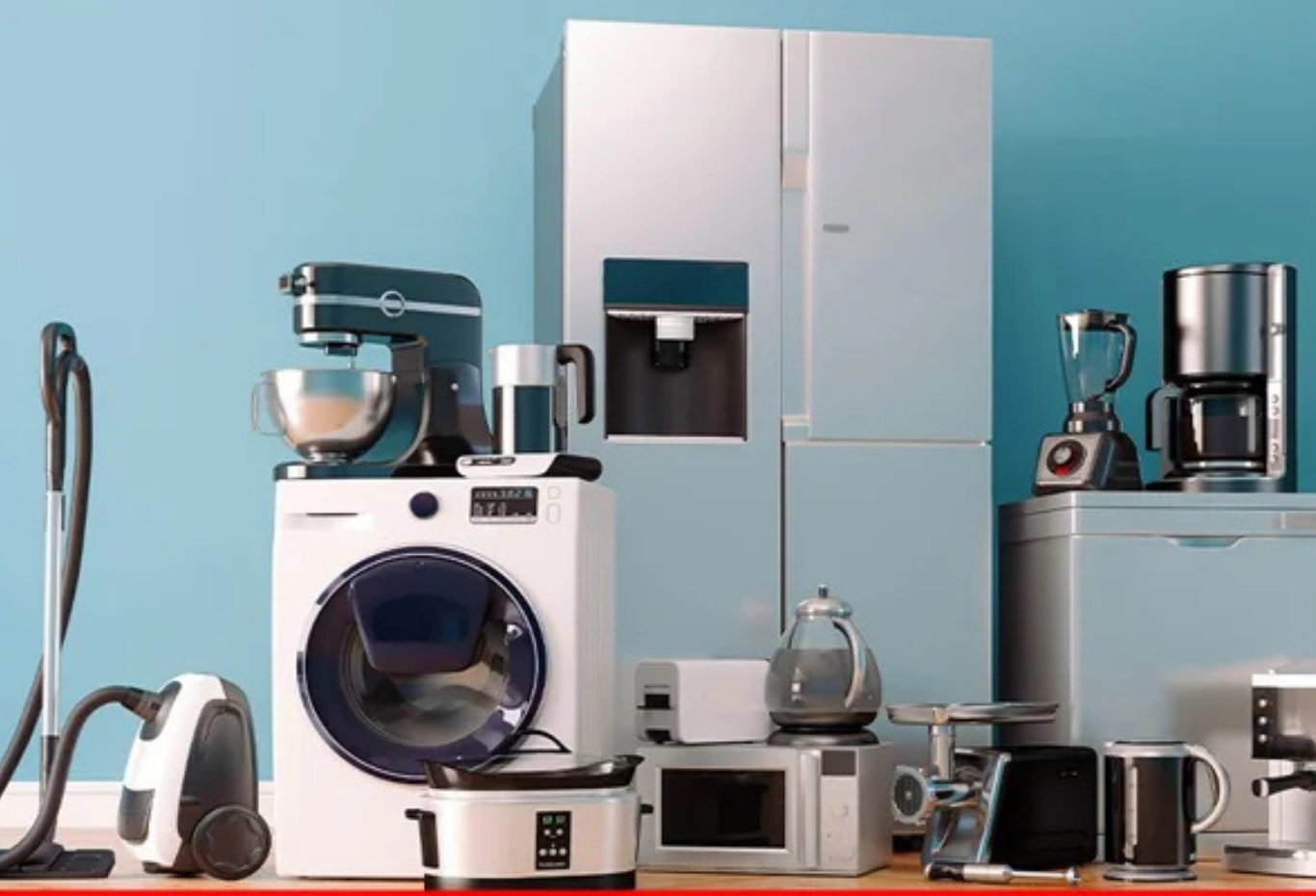
Appliances: A Practical Guide to Choosing, Using and Comparing Home Appliances
Home appliances have become an essential part of modern life. From keeping food fresh and washing clothes to preparing meals, cooling rooms and cleaning the home, appliances handle many repetitive jobs that would otherwise require considerable time and effort.
But buying an appliance is rarely as simple as choosing the most popular model.
A refrigerator may need to run continuously. A washing machine may be used several times each week. An air conditioner can have a major effect on household electricity consumption. A dishwasher needs to fit both the kitchen and the household's routine. Even a small appliance such as a microwave, kettle or coffee maker can become frustrating if it does not match the way you use it.
That makes appliance research less about finding one universally "best" product and more about understanding which combination of size, performance, efficiency, features, reliability, price and convenience makes sense for your home.
This guide looks at appliances from that practical perspective.
What Are Home Appliances?
Home appliances are electrical or gas-powered products designed to perform specific household tasks.
They can generally be divided into several major groups:
-
Kitchen appliances
-
Refrigeration appliances
-
Laundry appliances
-
Heating and cooling appliances
-
Cleaning appliances
-
Small household appliances
-
Personal-care appliances
-
Smart home appliances
Some appliances are used every day, while others may only be needed occasionally.
This difference matters when deciding how much to spend. A refrigerator or washing machine may justify greater attention to long-term running costs because it can be used for years, while an occasional-use countertop appliance may be judged more heavily on purchase price, storage and convenience.
Start With Your Home, Not the Appliance
One of the most useful ways to shop for appliances is to begin with the space and routine you already have.
Before looking at models, measure the available area.
Consider:
-
Width
-
Height
-
Depth
-
Door-opening space
-
Ventilation requirements
-
Nearby cabinets
-
Electrical outlets
-
Water connections
-
Drainage
-
Gas connections where applicable
-
Delivery access
An appliance that technically fits into a room may still be difficult to use if doors cannot open properly or there is not enough clearance around it.
This is particularly important for refrigerators, washing machines, dryers, dishwashers and built-in cooking equipment.
Samsung's current home-appliance buying guidance similarly emphasizes size, design and features when selecting refrigerators and laundry appliances.
Major Appliance Categories
A useful appliance category should not treat every product as if it solves the same problem.
Refrigerators and Freezers
Refrigerators are among the most important household appliances because they operate for long periods and directly affect food storage.
When comparing refrigerators, look at:
-
Overall capacity
-
Refrigerator-to-freezer space
-
Door configuration
-
Shelf arrangement
-
Temperature controls
-
Interior organization
-
Energy efficiency
-
Noise
-
Door seals
-
Installation requirements
A larger refrigerator is not automatically a better refrigerator.
If most of the available space is unused, you may be paying for capacity you do not need. ENERGY STAR notes that larger refrigerators generally consume more energy and recommends choosing an appropriately sized model.
Washing Machines
Washing machines can differ significantly in capacity, design and operating features.
Important factors include:
-
Load capacity
-
Drum design
-
Wash programs
-
Spin speed
-
Water consumption
-
Energy use
-
Noise
-
Door configuration
-
Installation requirements
-
Maintenance needs
The right capacity depends on household size and laundry habits.
A larger machine may be useful for families or people who regularly wash bulky items, while a smaller model may make more sense for limited laundry volumes or smaller living spaces.
Energy use should also be considered. Modern washing machines may use sensors and specialized cycles to adjust water and washing conditions.
Clothes Dryers
Dryers can save considerable time, particularly in homes where outdoor drying is difficult.
When comparing dryers, consider:
-
Capacity
-
Drying technology
-
Energy consumption
-
Cycle length
-
Moisture sensors
-
Noise
-
Venting requirements
-
Maintenance
-
Installation space
Heat-pump dryers can be particularly interesting for buyers focused on energy efficiency, but the best choice depends on purchase price, usage frequency, climate and available installation options.
Dishwashers
A dishwasher can reduce the amount of manual dishwashing required, but its value depends heavily on household habits and kitchen space.
Important features include:
-
Capacity
-
Wash programs
-
Rack configuration
-
Noise level
-
Water consumption
-
Drying method
-
Soil sensors
-
Energy efficiency
-
Installation requirements
ENERGY STAR identifies features such as soil sensors, improved water filtration and efficient spray systems as technologies that can improve dishwasher performance while reducing resource consumption.
Rather than selecting the dishwasher with the longest feature list, look for one whose capacity and cycles match the dishes your household actually produces.
Kitchen Appliances Beyond the Refrigerator
The kitchen contains many different appliance types, and each one should be evaluated according to how often it is used.
Ovens and Cookers
When choosing cooking appliances, consider:
-
Cooking capacity
-
Gas or electric operation
-
Temperature control
-
Heating performance
-
Cleaning method
-
Installation
-
Safety features
-
Energy consumption
A household that cooks large meals frequently may value oven capacity, while someone who prepares simple meals may benefit more from speed and easy cleaning.
Microwaves
Microwaves are useful for reheating, defrosting and preparing certain foods quickly.
Consider:
-
Interior capacity
-
Power level
-
Control design
-
Preset programs
-
Cleaning convenience
-
Counter space
-
Door configuration
A larger microwave may sound more useful, but it also occupies more space. The right size is the one that handles your normal cookware and meal portions without unnecessarily taking over the kitchen.
Small Kitchen Appliances
Small kitchen appliances include products such as:
-
Toasters
-
Kettles
-
Coffee makers
-
Blenders
-
Food processors
-
Air fryers
-
Hand mixers
-
Stand mixers
-
Rice cookers
-
Electric grills
These products can provide convenience, but they also introduce a storage problem.
Before buying another countertop appliance, consider whether you have enough space and whether the appliance will be used regularly.
A product that performs one task extremely well may be worthwhile if you use that task frequently. Otherwise, a multipurpose appliance may provide better value.
Air Conditioners and Home Cooling
Air conditioners can be among the most important appliances in warm climates.
The wrong size can create problems in either direction.
An undersized unit may struggle to maintain the desired temperature, while an oversized unit may not provide the intended comfort or humidity control.
When evaluating an air conditioner, consider:
-
Room size
-
Ceiling height
-
Sun exposure
-
Insulation
-
Number of occupants
-
Local climate
-
Energy efficiency
-
Cooling capacity
-
Noise
-
Installation requirements
-
Maintenance access
Do not select capacity based only on room size when other factors significantly affect the cooling load.
For energy-conscious buyers, efficiency ratings and actual expected usage can be more useful than focusing only on the purchase price.
Vacuum Cleaners and Cleaning Appliances
Cleaning appliances have evolved from basic vacuum cleaners into a wide range of products.
Options include:
-
Upright vacuums
-
Canister vacuums
-
Stick vacuums
-
Cordless vacuums
-
Robot vacuums
-
Wet-and-dry cleaners
-
Carpet cleaners
-
Steam cleaners
The best choice depends on the home.
For example, a home with stairs may benefit from a lighter machine. A home with pets may require stronger attention to hair removal and filtration. A large floor area may make battery life particularly important for cordless models.
Robot vacuums can reduce routine cleaning effort, but they do not necessarily replace every type of conventional cleaning.
What Does Energy Efficiency Mean for Appliances?
Energy efficiency describes how effectively an appliance performs its intended task relative to the energy it consumes.
This matters because the purchase price is only part of the cost of owning an appliance.
For frequently used appliances, electricity or gas costs can accumulate over many years.
ENERGY STAR provides efficiency information for categories including refrigerators, clothes washers and dryers, dishwashers, freezers, dehumidifiers and electric cooking products.
When comparing models, look for the relevant efficiency label or certification used in your market rather than assuming that a newer or more expensive appliance is automatically more efficient.
Purchase Price vs Lifetime Cost
A common appliance-shopping mistake is comparing products only by their upfront prices.
Imagine two washing machines:
Model A: Lower purchase price but higher operating costs.
Model B: Higher purchase price but lower operating costs.
The cheaper machine may not actually be cheaper over several years.
A better comparison is:
Purchase price + installation + energy/water use + maintenance + expected repairs − available incentives or savings
The exact calculation varies by product and region, but the principle is useful.
Consumer Reports has also highlighted the importance of considering operating costs when comparing major appliances such as refrigerators, washers, dryers and dishwashers.
Appliance Features: Useful Innovation vs Marketing
Modern appliances can include dozens of features.
Some genuinely improve convenience.
Others may be used rarely.
Examples of potentially useful features include:
-
Automatic load sensing
-
Adjustable temperature control
-
Moisture sensors
-
Eco cycles
-
Delayed start
-
Automatic shutoff
-
Self-diagnostic systems
-
App notifications
-
Remote monitoring
-
Customizable programs
But a longer feature list does not automatically make an appliance better.
Ask a simple question:
Will I use this feature regularly?
If the answer is no, it should probably have less influence on your purchase decision.
Smart Appliances and Connected Homes
Smart appliances can connect to phones, home networks or broader smart-home systems.
Depending on the product, they may allow users to:
-
Monitor operation
-
Receive notifications
-
Change settings
-
Track energy consumption
-
Diagnose certain problems
-
Schedule cycles
-
Integrate with other smart-home devices
Connectivity can be useful, but it also introduces additional considerations.
Before purchasing a connected appliance, think about:
-
App quality
-
Software support
-
Wi-Fi requirements
-
Privacy
-
Account requirements
-
Offline functionality
-
Compatibility with your existing smart-home ecosystem
A smart feature should solve a real problem rather than simply make the product appear more advanced.
Appliance Safety Should Come Before Convenience
Appliances combine electricity, heat, moving components, water, gas or refrigeration systems.
Correct installation and operation are therefore important.
Government consumer-safety guidance recommends following appliance manuals, avoiding overloaded outlets, keeping liquids away from electrical equipment, and using qualified professionals for appropriate installation and repair work.
Before using a new appliance:
-
Read the manufacturer's instructions.
-
Check that the electrical supply is appropriate.
-
Inspect the cord and plug.
-
Confirm that installation requirements are met.
-
Keep ventilation openings clear where required.
-
Keep water away from electrical connections.
-
Do not continue using an appliance that appears damaged or malfunctioning.
Safety requirements and certification marks vary by country, so consumers should check the standards applicable in their own market. For example, UK government guidance recommends checking safety markings, instructions, warnings and manufacturer information when purchasing products online.
Appliance Installation Matters More Than Many Buyers Expect
A good appliance can perform poorly if it is installed incorrectly.
Installation may involve:
-
Electrical connections
-
Water supply
-
Drainage
-
Gas connections
-
Ventilation
-
Leveling
-
Wall clearance
-
Door clearance
-
Mounting
Large or permanently connected appliances should be installed according to the manufacturer's requirements and applicable local regulations.
Do not assume that a product can simply be unpacked, plugged in and used.
Appliance Maintenance and Cleaning
Maintenance can extend useful service life and help an appliance operate properly.
Different products require different care.
Refrigerator Maintenance
Check door seals, keep the interior appropriately organized, clean as recommended, and maintain ventilation around the unit.
ENERGY STAR recommends appropriate temperature settings, sufficient air circulation and checking door seals as part of refrigerator efficiency practices.
Washing Machine Maintenance
Depending on the model, maintenance may include:
-
Cleaning detergent compartments
-
Cleaning filters
-
Checking hoses
-
Running maintenance cycles
-
Leaving the door open when appropriate to reduce moisture buildup
-
Removing residue
Always follow the specific manufacturer's instructions.
Dishwasher Maintenance
Regularly inspect filters, spray arms and seals where the manufacturer recommends cleaning them.
Avoid assuming that a dishwasher is maintenance-free simply because it cleans itself during normal operation.
How to Choose Appliances for a Small Home
Limited space changes the buying strategy.
For a smaller home, prioritize:
-
Compact dimensions
-
Multi-functionality
-
Easy storage
-
Efficient use of counter space
-
Appropriate capacity
-
Quiet operation
-
Simple installation
Measure everything before buying.
This includes not only the final location but also the path from the delivery entrance to the installation area.
A product can be the perfect size for the kitchen and still fail to fit through a doorway, hallway or staircase.
How to Choose Appliances for a Large Family
Larger households generally place greater emphasis on capacity and workload.
Useful considerations include:
-
Larger refrigerator capacity
-
Larger laundry loads
-
Faster washing cycles
-
Larger dishwashing capacity
-
High-volume cooking
-
Durability
-
Energy consumption
-
Easy maintenance
However, larger does not always mean better.
The goal is to match capacity with actual household demand.
How to Compare Appliance Brands
Brand reputation can be useful, but it should not be the only factor.
When comparing brands, investigate:
-
Product reliability
-
Warranty terms
-
Local service availability
-
Spare-parts availability
-
Customer support
-
Repair network
-
Product specifications
-
User reviews
A highly respected brand may still have a particular model that is not suitable for your needs.
Therefore, compare models first and brands second.
How to Read Appliance Reviews
Online reviews can help reveal practical issues that specifications cannot.
Look for recurring comments about:
-
Noise
-
Installation
-
Ease of use
-
Cleaning
-
Reliability
-
Energy consumption
-
Customer service
-
Warranty claims
-
Long-term performance
Pay particular attention to reviews from people with similar household requirements.
Someone living alone may have very different expectations from a large family.
Also distinguish between complaints about the product itself and complaints about delivery, installation or retailer service.
Buying Appliances Online
Online appliance shopping can provide a much wider selection, but it requires additional checks.
Before ordering, confirm:
Product Dimensions
Make sure the appliance fits your available space.
Electrical Requirements
Verify voltage, frequency, plug type and power requirements where applicable.
Installation
Check whether installation is included or requires a separate service.
Delivery
Large appliances may require special delivery arrangements.
Warranty
Understand who provides the warranty and where service is available.
Returns
Check whether large or installed appliances can be returned and under what conditions.
Seller Reputation
Use established sellers where possible and verify product authenticity and specifications.
Common Appliance-Buying Mistakes
Buying the Biggest Model
More capacity can mean more cost, more space and potentially higher energy consumption.
Choosing Features Instead of Function
A long feature list is not a substitute for good performance.
Ignoring Installation
A product may be affordable until you discover that additional electrical, plumbing or ventilation work is required.
Forgetting Operating Costs
The cheapest appliance to purchase is not necessarily the cheapest to own.
Ignoring Service Availability
A product becomes much less attractive if replacement parts or qualified service are difficult to obtain.
Buying Without Measuring
This remains one of the easiest mistakes to prevent.
Treating Reviews as Absolute Truth
Reviews should identify patterns, not replace specifications, safety information and professional advice.
A Simple Appliance Buying Checklist
Before buying any major appliance, ask:
1. Will it fit?
Measure the appliance space and delivery route.
2. Will it perform the required job?
Focus on actual household needs.
3. How much will it cost to operate?
Consider electricity, gas and water where applicable.
4. Is it appropriate for the household size?
Avoid paying for unnecessary capacity.
5. Is installation straightforward?
Check electrical, water, drainage, ventilation and mounting requirements.
6. What maintenance does it require?
Understand filters, cleaning and servicing.
7. What happens if it breaks?
Check warranty and service availability.
8. Are the features actually useful?
Prioritize functions you expect to use.
9. Is the product appropriate for the local environment?
Climate, electricity supply, water conditions and available service can matter.
10. What is the total cost?
Look beyond the purchase price.
The Future of Home Appliances
Home appliances are increasingly becoming more connected, automated and energy-conscious.
Sensors can adjust cycles based on load conditions. Connected systems can provide usage information. More products are designed around energy and water efficiency. Refrigeration, laundry and cooking technologies continue to evolve.
However, technological advancement does not eliminate the fundamental buying principles.
A refrigerator still needs to fit the kitchen.
A washing machine still needs to handle the household's laundry.
An air conditioner still needs to provide appropriate cooling.
A dishwasher still needs to clean dishes effectively.
And every appliance still needs to be safe and practical to operate.
The most useful technology is therefore technology that improves a real part of everyday life.
Final Thoughts
Buying appliances should not be treated as a race to find the product with the most features or the highest price.
A better approach is to match the appliance to your home, your routine, your space and your long-term budget.
Start with measurements. Determine the required capacity. Compare energy use. Understand installation requirements. Check warranty and service options. Research recurring customer feedback. Then decide which features are genuinely worth paying for.
For frequently used appliances, think beyond the checkout price and consider the cost of operating the product throughout its useful life.
And above all, treat safety as a requirement rather than an optional feature.
The best appliance is not necessarily the most expensive, newest or most technologically advanced model.
It is the one that does its job well, fits your home, costs a reasonable amount to operate, can be maintained properly and continues to provide useful value over time.